Key takeaways · Race brief
- 1Rehearse your T1 and T2 sequence three times in your driveway or balcony — muscle memory beats frantic rushing when your brain is swim-dizzy.
- 2Always buckle your helmet BEFORE touching your bike in T1, and keep it buckled until your bike is fully racked in T2 to avoid automatic time penalties.
- 3Swapping standard laces for ₹300 elastic speed laces and using a pre-clipped race belt instantly saves 60–90 seconds in T2.
- 4Keep your transition area minimalist: only gear you actually wear on the course belongs on your mat — everything else stays inside your transition bag.
Setting Up a Zero-Clutter Transition Mat
After 30 to 70 minutes horizontal in open water, standing upright triggers a mild blood-pressure drop that temporarily fogs fine motor skills. The simpler your transition layout, the faster and calmer you move.
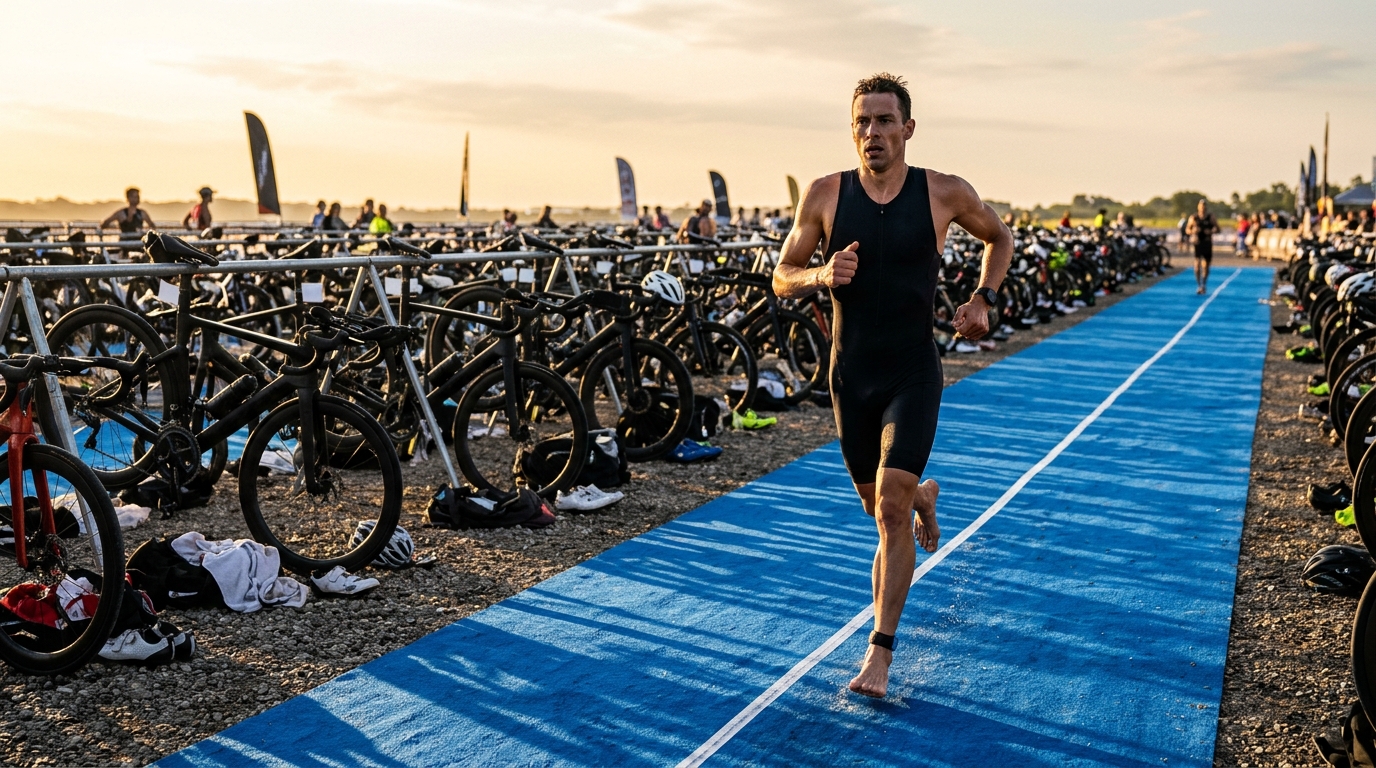
Lay down a small, brightly coloured hand towel next to your front wheel (bright neon or patterned towels make your spot instantly recognisable from 40 metres away). Arrange gear strictly in chronological order from back to front: Bike gear on the left, Run gear neatly grouped on the right.
Chronological T1 & T2 Gear Setup Checklist
| Phase | Exact Placement | Pro Micro-Hack |
|---|---|---|
| Bike Rack | Saddle nose hooked on rail, rear wheel facing inward | Pre-shift into an easy gear (small chainring, middle cassette) before leaving |
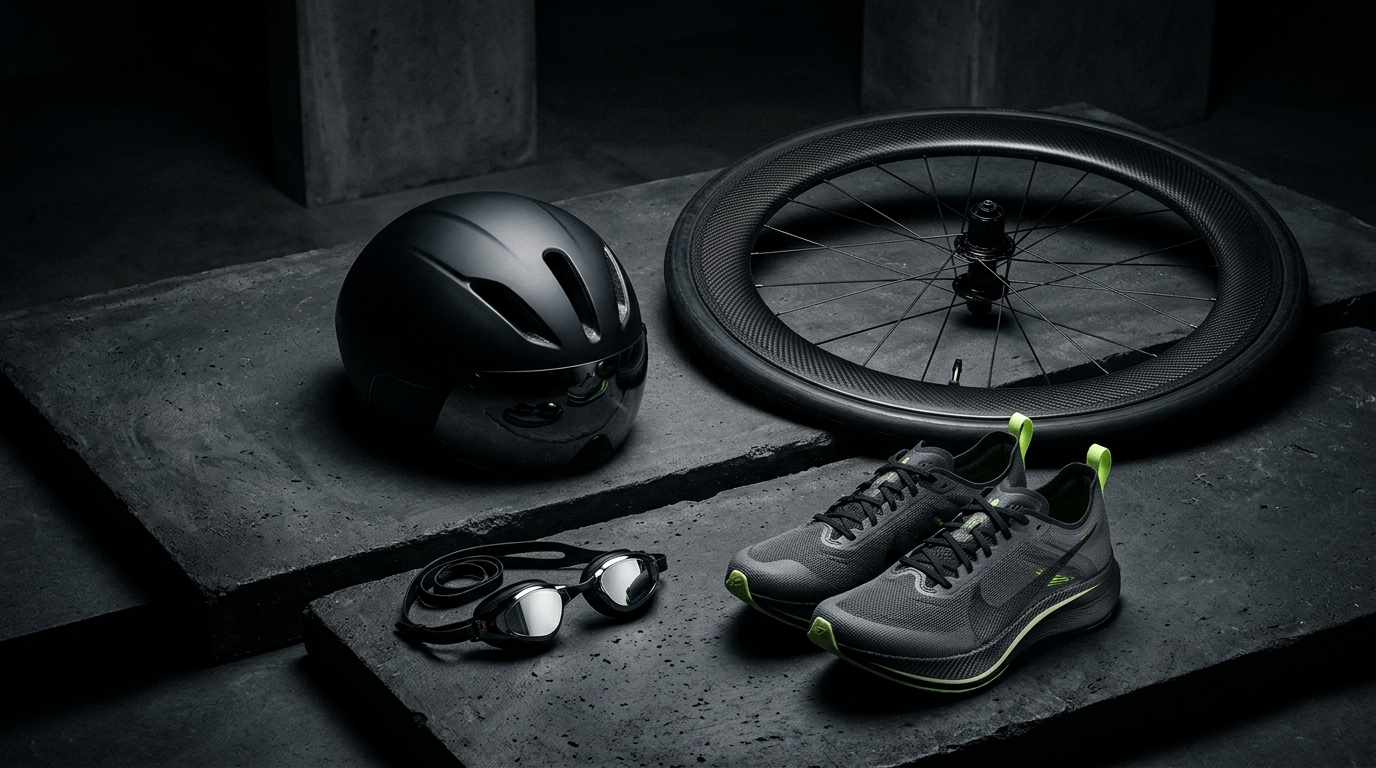
| Helmet & Shades | Helmet upside-down on aero/handlebar, straps open outward | Rest sunglasses open inside helmet so one scoop grabs both |
| Bike Shoes | Unstrapped wide open on towel (or rubber-banded to pedals for advanced) | Dust a pinch of baby powder inside so damp feet slide cleanly |
| Run Shoes & Belt | Elastic laces loosened, socks rolled down like doughnuts on top | Pre-pin race bib to elastic race belt — zero safety-pin fumbling |
T1 (Swim-to-Bike) Choreography: Step by Step
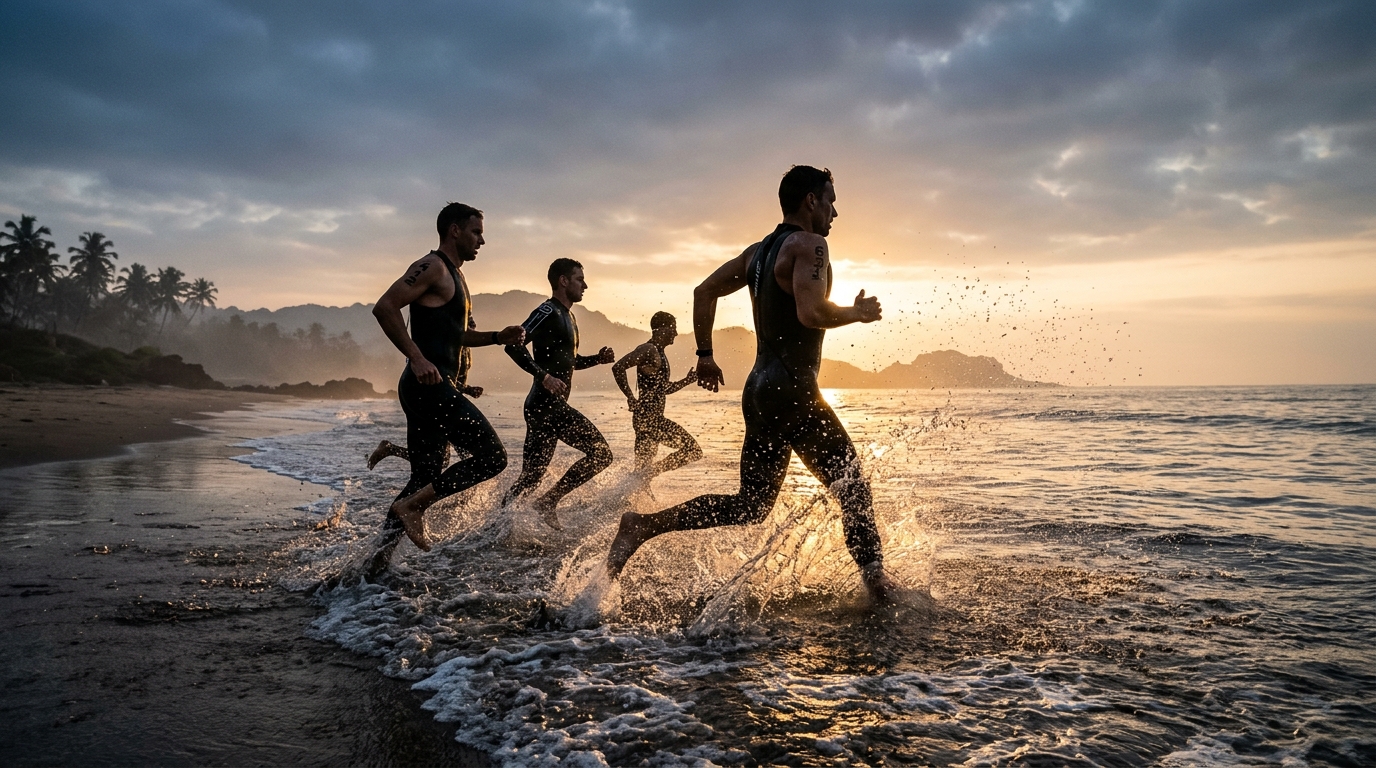
Your T1 starts the moment your hands touch shallow sand or the exit ramp. Stand smoothly, kick slightly harder during the final 50 metres of the swim to pump blood back to your legs, and jog — do not sprint — into the transition zone while pulling off your swim cap and goggles.
- Count rows, not bikes: On race morning, count how many racks down from Swim-In your bike sits AND note a permanent overhead landmark (like a floodlight pole or banner) because neighbouring bikes disappear throughout the race.
- Helmet first, always: Put on sunglasses, fasten helmet chinstrap, then lift your bike off the rack. Moving a bike with an unbuckled helmet is a mandatory race penalty.
- Mount line discipline: Walk or jog your bike by the saddle or stem until BOTH tyres fully cross the green Mount Line before swinging a leg over.
T2 (Bike-to-Run): Smooth Dismount to Fast First Kilometre
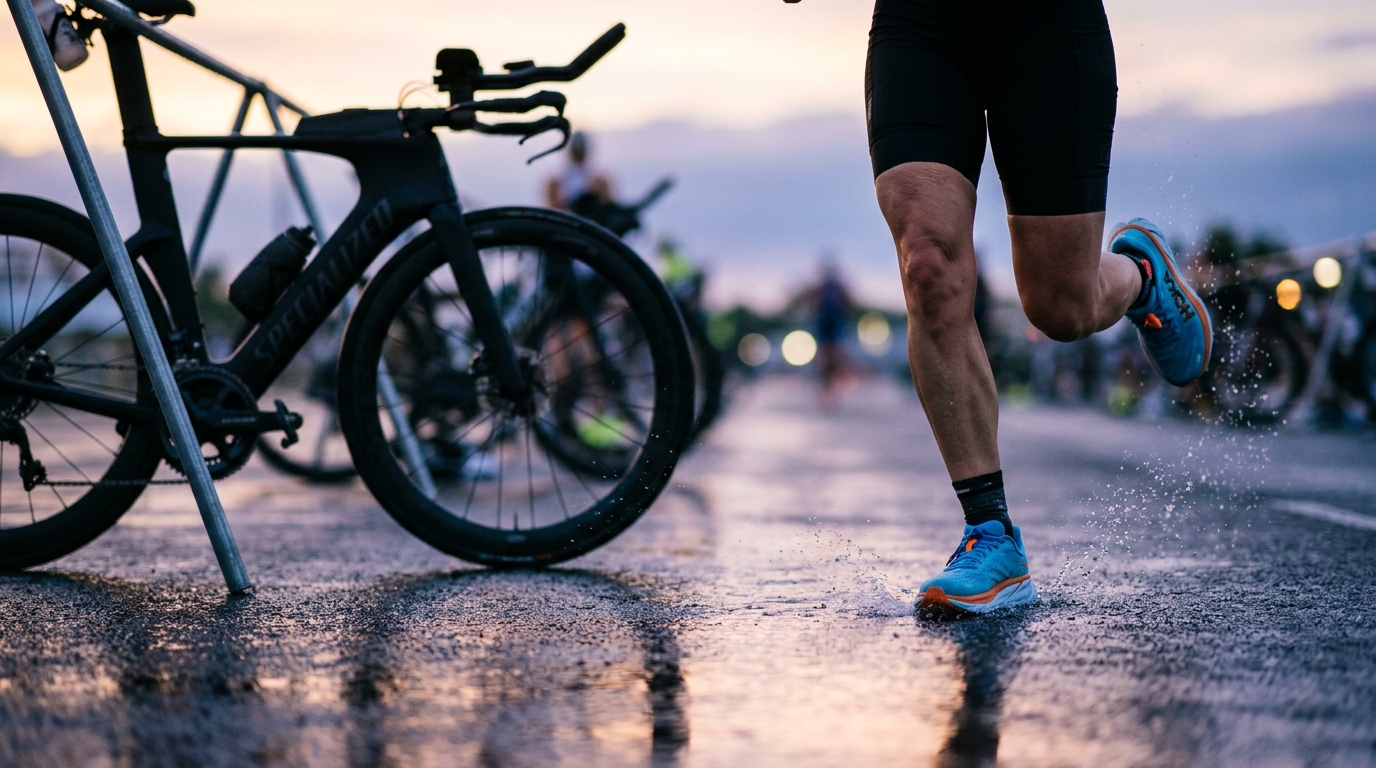
During the final 1.5 kilometres of the cycling leg, shift to a lighter gear and raise your cadence to 90–95 RPM. This flushes heavy quad tension and primes fast-twitch fibres for running turnover. Take one final sip of water and double-check that you have cleared all gel wrappers into your pocket.
Dismount cleanly BEFORE the red Dismount Line — crossing on your saddle triggers an immediate penalty. Keep your helmet buckled until your bike is securely racked. Unbuckle helmet, slip into elastic-laced running shoes, snap your race belt around your waist (bib facing forward for the run), grab your cap and run gels, and jog out of Run-Out while putting your cap on in motion.
Flying Mounts: Worth Learning or Crash Risk?
Pre-clipping cycling shoes onto pedals with rubber bands looks electric on YouTube, but dropping a chain or crashing at the mount line costs far more than the 15 seconds saved. Only attempt a flying mount on race day if you have executed 20 consecutive clean practices in an empty parking lot at race speed. For 95% of age-group athletes, jogging cleanly in cycling shoes (or putting shoes on at the rack) is safer, calmer, and virtually identical in total time.
Frequently asked questions
Gear & Transitions FAQs.
Written by
40+ Open-Water & Tri EventsVikram Nair
ASCA Level 3 Swim Coach · Former National Open-Water Medallist
Vikram leads WeRox's coastal open-water clinics and race-day transition safety workshops, helping adult-onset swimmers build calm, efficient ocean technique.
Endurance training, pacing, and nutrition guidance in the WeRox Journal is for educational purposes and does not replace personalised medical clearance. Consult a qualified sports physician before undertaking long-distance triathlon racing.