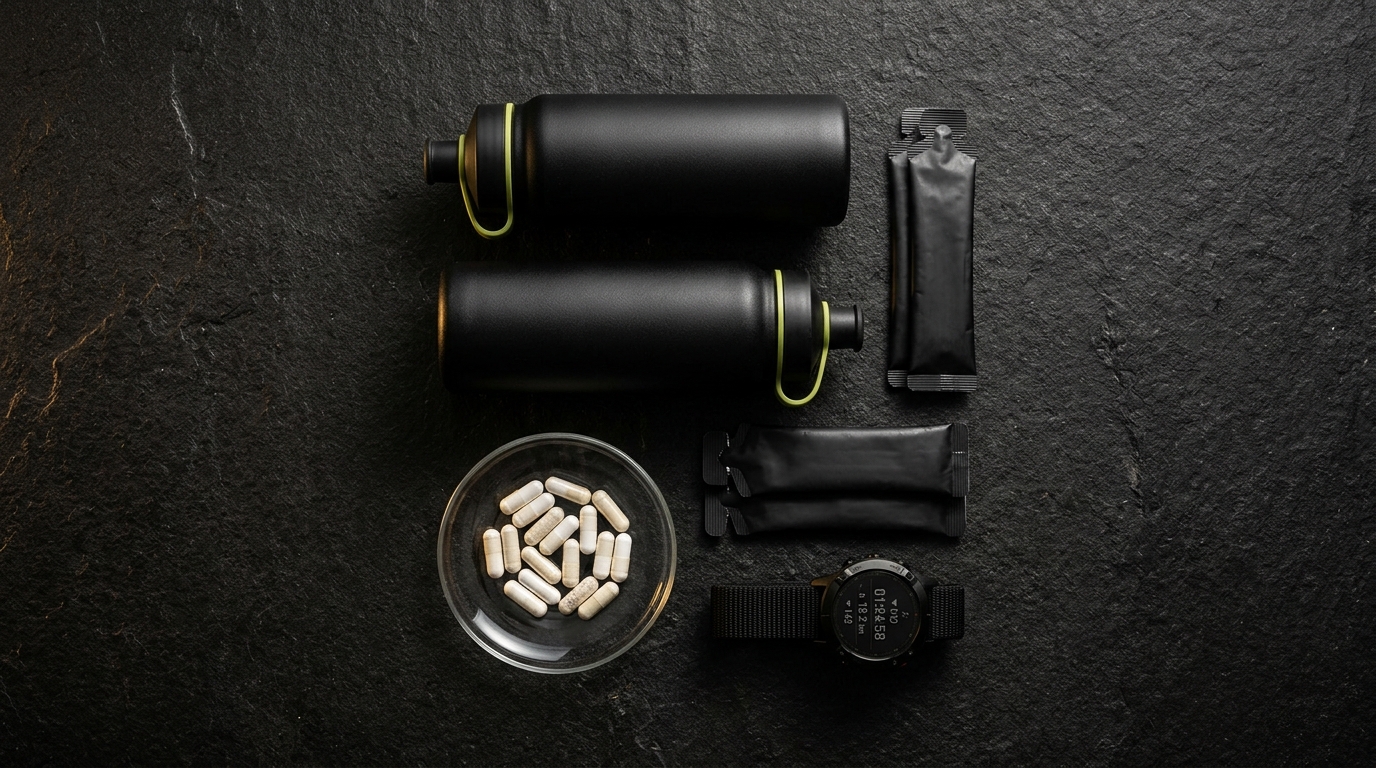

Key takeaways · Race brief
- 1A CGM measures interstitial glucose every 1 to 5 minutes, providing a live window into carbohydrate availability.
- 2The 'reactive hypoglycemia' trap: eating high-glycemic carbs 30–45 minutes before a race can cause an insulin spike followed by a mid-race energy crash.
- 3During exercise, contracting muscles absorb glucose via non-insulin-mediated GLUT4 translocation, keeping glucose stable even with high-carb gels.
- 4Optimal endurance target: maintaining steady blood glucose between 110 and 140 mg/dL throughout multi-hour efforts.
Interstitial Fluid vs. Capillary Blood: Understanding the Delay
CGM sensors insert a tiny flexible filament into the subcutaneous interstitial fluid rather than a vein. Because glucose moves from blood into interstitial fluid via diffusion, there is a natural physiological lag of 5 to 12 minutes.
Understanding this lag prevents knee-jerk over-fuelling: when you take a high-carb energy gel on the bike, do not expect an immediate spike in your smartphone app; the rise will register 10 minutes later.
Fixing the Pre-Race Breakfast Window
One of the biggest discoveries athletes make with a CGM is the danger of eating 30 to 45 minutes before start gun. Consuming simple sugars right before exercise triggers a massive insulin surge. As soon as you begin swimming or running, muscle contraction also pulls glucose from the blood, causing blood sugar to plummet to 60–70 mg/dL within 15 minutes of racing.
Frequently asked questions
Nutrition & Hydration FAQs.
Written by
12+ Half & Marathon FinishesDr. Meera Iyer
PhD Exercise Physiology · ISSN Certified Sports Nutritionist
Specialising in hot-and-humid endurance fuelling, Dr. Iyer designs race-day sweat-sodium and carbohydrate protocols tailored to Indian tropical race climates.
Endurance training, pacing, and nutrition guidance in the WeRox Journal is for educational purposes and does not replace personalised medical clearance. Consult a qualified sports physician before undertaking long-distance triathlon racing.